











Your home deserves the best, and that’s exactly what our lead-free designer taps provide. We recognise that your choice of tap is an important component in complimenting your kitchen styling, which is why we offer a variety of choices. With the extra benefit of being lead-free, you’re not just improving the appearance of your home, but also its safety and sustainability. Choose from our four-way, three-way or single spout taps.
Our range of Infinity Taps
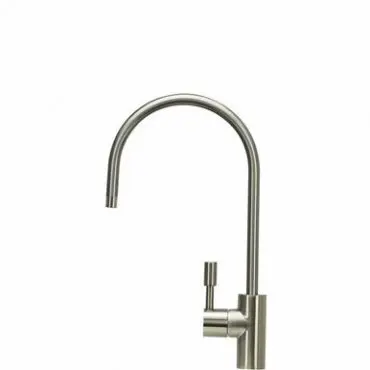
Mini Robin one-way tap
The Mini Robin will also add that perfect finishing touch.
If space is at a premium or you simply want a more compact tap the mini is ideal.
Features
- Ceramic valve
- Single handle
- 7/16” connection
- Temperature 1 – 65°C
Minimum pressure
6 bar
Spout height
195mm
Worktop hole Ø
12mm
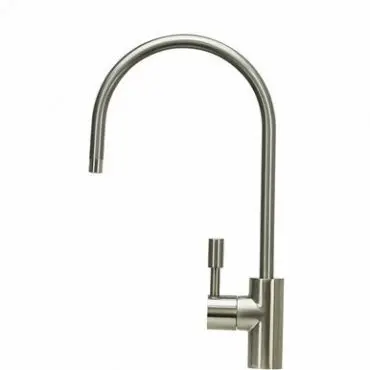
Robin one-way tap
Enjoy filtered drinking water on tap from the Robin. Its classic design and clean lines will add the
Perfect finishing touch to any kitchen.
Features
- One-way tap
- Temperature 1 – 65°C
- Ceramic valve
- 7/16” connection
Minimum pressure
6 bar
Spout height
170mm
Worktop hole Ø
12mm
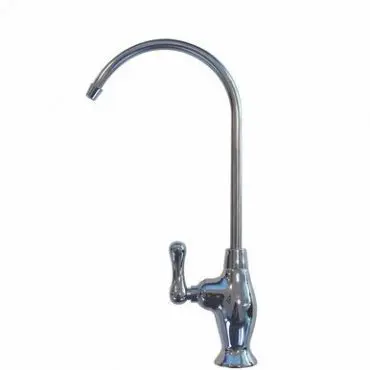
Oslo one-way tap
A traditional single-lever tap, the Oslo is perfect for cottage-style kitchens.
Available in a polished stainless steel finish, this tap will make your kitchen feel like home.
Features
- Temperature 1 – 65°C
- 3/8” connection
- Can use with RO systems
- Ceramic valve
Minimum pressure
6 bar
Spout height
240mm
Worktop hole Ø
35mm
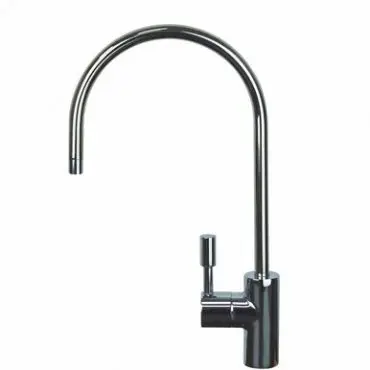
Hike one-way tap
A stylish and contemporary single tap. The simple, clean curve of the Hike is the perfect addition to any kitchen and will never go out of fashion.
Features
- One-way tap
- Temperature 1 – 65°C
- Ceramic valve
Pressure
1.5 – 6 bar
Spout height
295 mm
Worktop hole Ø
12mm
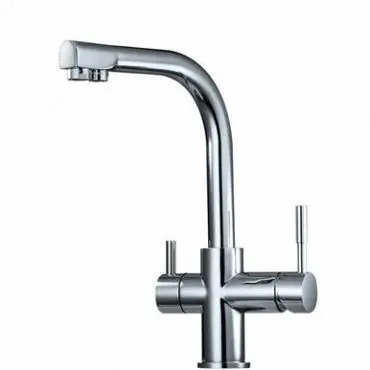
Forum three-way tap
One of our most versatile taps, the Forum will suit both traditional and contemporary kitchens.
With a turn of the handle enjoy hot, cold or filtered water on tap.
Features
- Dual spout
- 3/8” connection
- Ceramic valve
- Temperature 1 – 65°C
Maximum pressure
6 bar
Spout height
290mm
Worktop hole Ø:
35mm
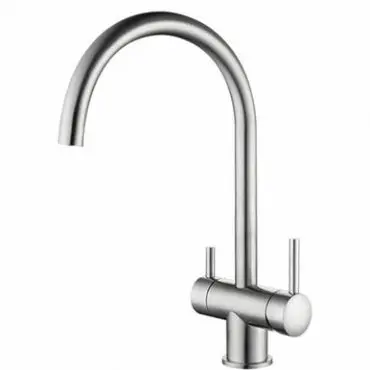
Ares three-way tap
Bold, clean lines and a robust stem make the Ares the perfect tap for the modern home.
Available in a polished stainless steel finish, this tap will look right at home in your kitchen.
Features:
- Temperature 1 – 65°C
- 3/8” connection
- Can use with RO systems
- Ceramic valve
Minimum pressure:
1 bar
Spout height:
240mm
Worktop hole Ø:
35mm
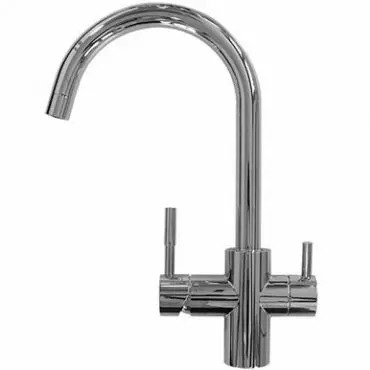
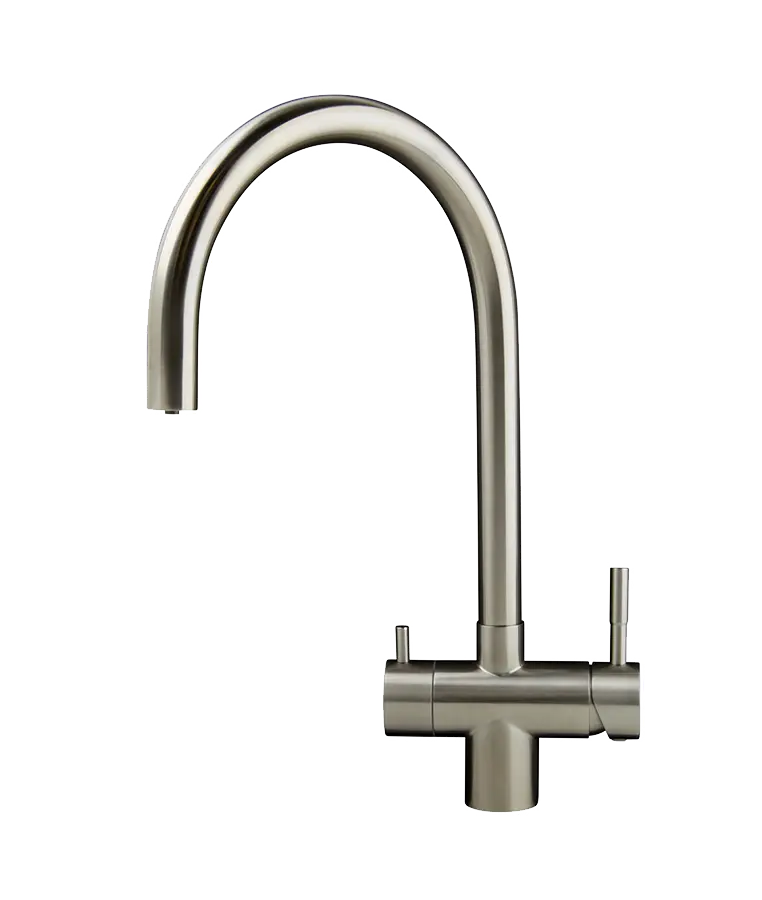
Virka four-way tap
Top of the range, the Virka exudes quality. The 4 way tap can provide hot, cold, filtered and softened water all from the same spout – now that’s impressive!
Features
- Temperature 1 – 65°C
- 3/8” connection
- Can use with RO systems
Pressure
1.5 – 6 bar
Spout height
370 mm
Worktop hole Ø
36mm
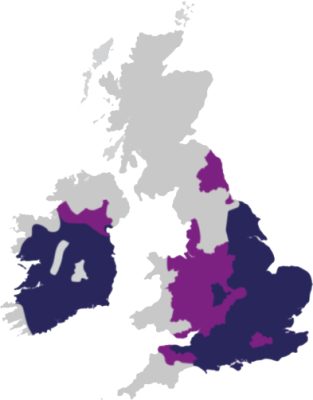
Interested in our taps? Find your local dealer for more information
Look up your local dealer
Designer Kitchen Taps FAQs
What is the difference between single and dual flow taps?
Single-flow taps are becoming more common in the UK. The water mixes in the body of the tap and spout and gives a greater flow due to the larger outlet/spout diameter. They provide for an even temperature mix at the spout exit. Non-return valves must be fitted if on an unbalanced system.
Dual-flow taps used to be standard in UK homes. These taps feed hot water through the centre of the spout, separate from the cold. The spout will not get too hot to touch. Non-return valves are not required in these instances when installing a dual-flow tap.
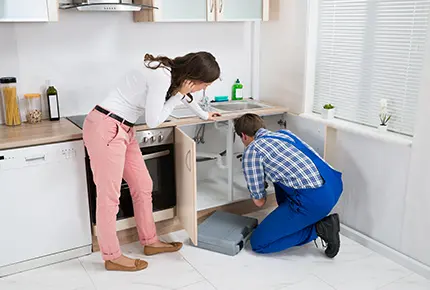
Do I need a plumber to install kitchen taps?
No regulations prevent homeowners from installing kitchen taps; however, if not fitted correctly, leakage and water damage could cost you more in the long run. Our recommendation is to use a qualified plumber to fit your taps.
Why are taps expensive?
The cost of taps is mainly due to the materials used to ensure the quality, durability, finish and performance. Cheaper taps may use substandard materials that tarnish quicker and fail earlier than expected.
How long do taps last?
Good quality taps should last 10 to 15 years, depending on usage and upkeep. If you allow your taps to be damaged by limescale, you may find this period is much shorter.
How to prevent limescale forming on taps?
The best method to prevent limescale buildup and damage to your taps is to install a water softener. The water softener will remove the minerals in hard water that cause limescale to form.